
Guide to Canicross
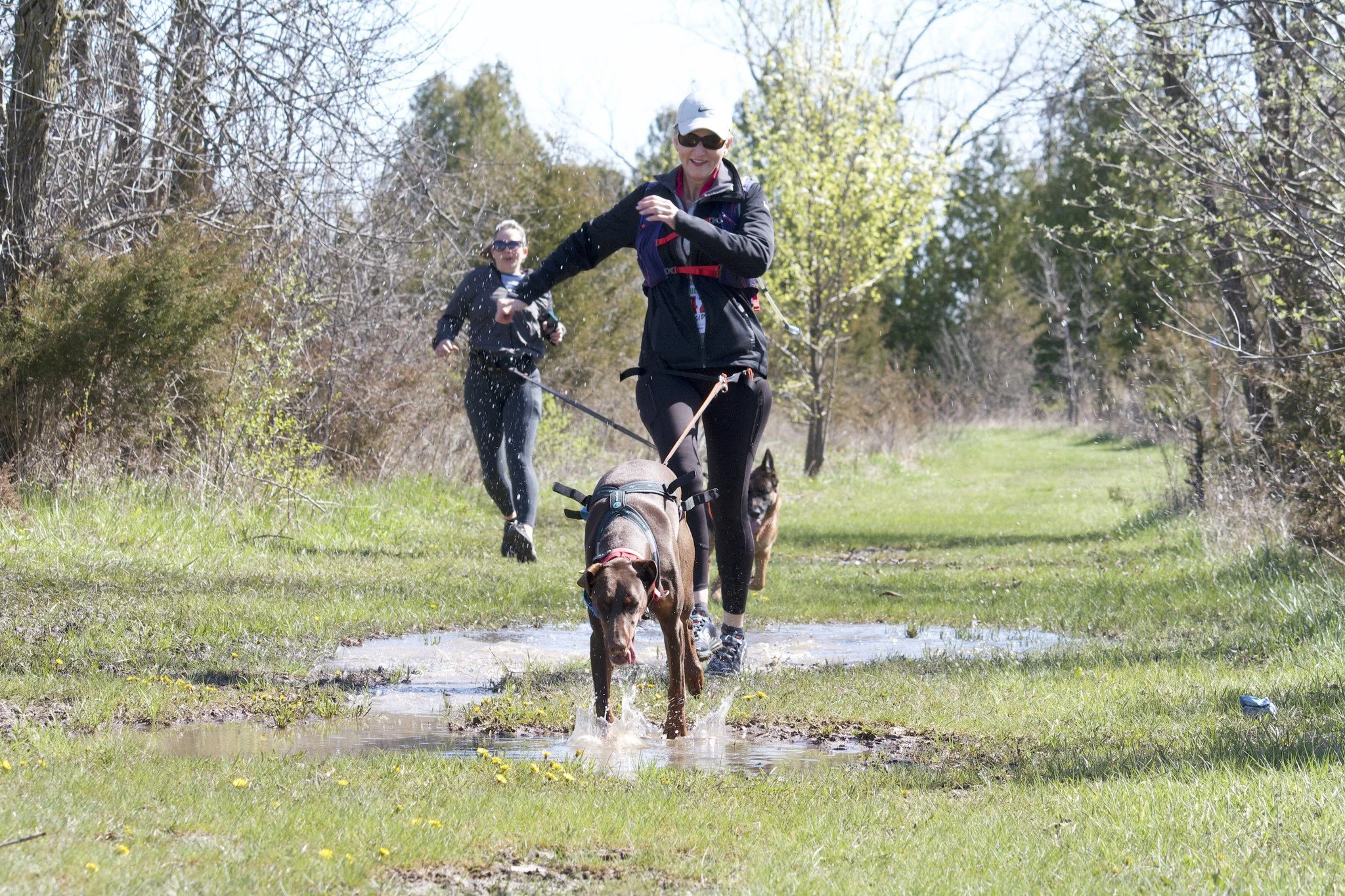
What is canicross?
Canicross is the dog-powered sport of cross-country running with a dog. The dog wears a properly fitted pulling harness and is connected by a bungee line to a belt worn by the runner.
Canicross developed from the sled-dog community as a way to condition and train dogs away from snow. It is now both a recreational activity and a competitive dryland-mushing discipline.
Although the dog may provide forward assistance, canicross is a team sport. The handler is still responsible for running, guiding the team, managing the line, communicating clearly, and choosing an appropriate pace and distance.
Choose your pathway
How you begin may depend on what you hope to do.
Recreational teams may use:
Calm, controlled starts
Walk-jog intervals
A combination of walking, jogging, and running
Planned stops and recovery breaks
Gradually increasing time and distance
This approach helps people and dogs enjoy the activity without requiring the dog or person to run at maximum effort.
Competition-focused teams may train differently. Early pulling sessions are often kept very short and exciting so the dog finishes while still eager to continue. This helps preserve drive, forward focus, line tension, and enthusiasm for working in harness.
Competition-focused training does not mean beginning with long or exhausting runs. Speed, distance, distractions, passing, and race-start skills should be developed progressively.
Learn more:
Recreational vs. Competitive Canicross
Teaching Your Dog to Pull in Harness
Building Canicross Distance Safely
Dog readiness
A dog does not need to be a traditional sled-dog breed to participate in canicross. Dogs of many breeds and sizes can enjoy the sport when the activity is appropriate for their health, structure, fitness, motivation, and temperament.
Before beginning, consider whether your dog:
Moves comfortably without limping or stiffness
Can walk and exercise without unusual breathing difficulty
Is comfortable wearing a harness
Can recover normally after physical activity
Enjoys moving forward with you
Can remain reasonably manageable around people, dogs, and trail distractions
Start with the dog you have rather than the distance or speed you hope to achieve. Conditioning should progress gradually, and the dog should finish sessions looking comfortable and interested in participating again.
Puppies and growing dogs
Puppies should not perform substantial, repetitive, or high-intensity pulling while their bones and joints are still developing. Growth plates are areas of developing bone that remain softer and more vulnerable to injury until the dog matures. Damage to a growth plate can interfere with normal bone and limb development.
Growth-plate closure varies by breed, size, and individual development, so age alone does not provide a perfect answer.
Under veterinary guidance, a puppy may be introduced to parts of the sport through:
Wearing an appropriately fitted harness
Learning directional and movement cues
Very short, low-intensity pulling experiences
Walking on suitable surfaces
Building confidence around equipment
Practicing calm group and trail behavior
The goal during puppyhood is familiarity and positive association—not sustained pulling, speed, or mileage.
Senior dogs, dogs returning from injury, dogs with orthopedic or respiratory concerns, and dogs that are overweight or poorly conditioned may also require a veterinarian-guided plan.
Know your dog
During and after activity, monitor:
Breathing
Gait and stride
Enthusiasm
Coordination
Willingness to pull
Recovery time
Signs of soreness later that day or the following day
Stop or reduce the workload when form, coordination, or enthusiasm begins to change. Do not wait until the dog is exhausted or unable to continue.
Learn more:
Is My Dog Ready for Canicross?
Canicross with a Puppy
Conditioning a Dog for Canicross
Warm-Ups, Cooldowns, and Recovery
Recognizing Fatigue and Overheating
Gear and cues
A proper canicross setup generally includes three connected pieces of equipment:
Dog pulling harness
The harness should be designed to allow pulling without restricting the shoulders, breathing, or natural movement. Fit depends on the harness design and the individual dog.
A walking harness is not automatically suitable for sustained pulling. Harness fit should be checked while the dog is standing and again while the line is under light tension.
Bungee line
The line connects the dog to the handler and includes elastic or shock-absorbing material. This reduces abrupt pulling forces on both the dog and runner.
The line should be managed carefully to prevent tangling, tripping, or dragging.
Canicross belt
A canicross belt sits around the handler’s hips and pelvis rather than concentrating force around the waist. It allows hands-free movement and distributes the dog’s pull more comfortably.
Foundational cues
Common dog-powered cues include:
Hike: Begin moving or increase forward effort
Easy: Reduce speed
Whoa: Stop
Gee: Turn right
Haw: Turn left
On By: Continue past a distraction
Line Out: Move forward and create light tension before starting
Back: Reduce speed or move closer to the handler
Commands differ between teams. Consistency matters more than using one exact word.
Recreational teams may emphasize controlled starts, reliable stopping, and transitions between walking and running. Competition-focused teams may place greater emphasis on explosive starts, sustained forward drive, passing, and maintaining focus at speed.
Before every session:
Check harness fit
Inspect the line and connection points
Confirm the belt is positioned correctly
Check the trail and weather
Carry water when appropriate
Bring waste-cleanup supplies
Warm up before asking for stronger pulling
Learn more:
Choosing a Canicross Harness
How Canicross Equipment Fits Together
Foundational Canicross Commands
Teaching Line Out
Teaching Safe Passing
Rules and official guidance
Canicross rules vary by event, sanctioning organization, country, race format, and host.
Event rules may address:
Minimum dog age
Required equipment
Line length
Harness construction
Start procedures
Passing
Dog substitutions
Race distances
Temperature and weather restrictions
Vaccination or health requirements
Human age divisions
One-dog and two-dog classes
Always review the rules for the specific event before registering or training toward it. Do not assume that the rules used by one race, club, or governing organization apply everywhere.
CaniVenture provides beginner education, participation guidance, and pathways into dog-powered activities. It is not a sanctioning or governing organization, and CaniVenture resources should not replace event rules, veterinary advice, or the standards of an official governing body.
Official sources may include:
International Federation of Sleddog Sports
International Sled Dog Racing Association
United States Federation of Sleddog Sports
The sanctioning organization listed by the race
The individual race director or event host
Before racing:
Confirm the dog-age requirement
Review the required equipment
Verify race distance and terrain
Read passing and start procedures
Check weather and temperature policies
Confirm health-document requirements
Follow the event’s official rulebook
Learn more:
Understanding Canicross Race Rules
Preparing for Your First Canicross Race
Recreational vs. Sanctioned Events
Dog-Powered Sports Organizations